
-The Family Personality
The Family Personality
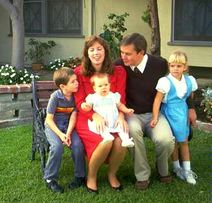
When we enter a home we sense a real family personality which impresses us for good or ill.
Just as truly as an individual has a personality, which radiates his or her moral influence, when we enter a home we sense a real family personality which impresses us for good or ill. It is determined by three elemental attitudes that are the foundation for the moral attributes of the home. These elemental family principles are: attitude toward God, attitude toward other family members, and attitude toward strangers.
Attitude Toward God
In Colossians 3, that beautiful chapter of the New Testament largely devoted to family life, is one jeweled expression of truth which shines with dazzling brightness in its golden setting: “Let the Word of Christ dwell in you richly in all wisdom” (Col. 3:16 NKJV). This verse sums up the attitude God wants in our families. Its presence will bring about peace and tranquility; its absence will result in disruption and discord.
There are homes where the father’s voice commands instant obedience, where the mother is loved and honored, where the children are examples of good conduct, yet there is no joy in the family. This is likely because the Word of Christ does not have its place there.
A day of crisis came in the history of Israel long gone, when their leader, Joshua, stepped forth to challenge them with their responsibility to God. It re-echoed throughout the camp in these startling words: “Choose for yourselves this day whom you will serve.” No sooner had he challenged them than he took the lead by declaring publicly, “As for me and my house, we will serve the Lord” (Josh. 24:15).
There is a responsibility on the part of every Christian parent to take this stand on behalf of his household. In effect this means that there is in the home a mandate greater than the word of either parent – the Word of Christ! This does not mean the displacement of parental authority, but rather its establishment, and there is a submission on the part of all to the greater authority of the Lord Jesus, who is “Head over all things” (Eph. 1:22).
“Let the Word of Christ dwell in you richly in all wisdom” will have a very practical bearing upon family functions. It is not simply that God is recognized as the Supreme Being, but that Christ, our Redeemer, whose shed blood is typically sprinkled upon the outer door posts of the house, has become the benign Lord and Benefactor of the home.
It means that giving thanks in His name will have a place at table, and every meal will be accepted as a personal gift from the Savior. It means that the Bible will not be neglected and gathering dust, but will be read regularly. If the Lord Himself is the Head of our homes, His Word must be of greatest value in directing our lives. And reading it will give a sanctity to the home which can be acquired in no other way.
I believe the Bible should be read by families with the dignity, respect and reverence which God’s Word deserves. It is not a matter of rushing through a chapter a day as a meaningless religious duty. God’s Book should be read carefully with the sense that every word is holy. Careless reading of the Scriptures does not instill reverence for it in our children.
The Bible is the most dramatic and interesting book in the world. Its phraseology is perfect, its scenes impelling, its language superb. If we make it a household book, it will give color and character to our family life that will bear rich dividends in good manners and conduct. The habit of reading the Bible together is a great investment for ourselves, our children, our neighborhood, city and nation.
The Word of Christ will not dwell in us richly unless we make a habit of talking with Him. Silence between friends on earth does not promote intimacy or affection. Nor does it with our Lord. Besides the reading of the Scriptures, therefore, family conversation with the Lord – concerning their interests, burdens, sorrows, joys, experiences, successes and failures – should be a regular activity. Prayer should be a family exercise. If family devotions are followed in sincerity of heart, and not merely in a sense of religious duty, the results will be far-reaching for good.
Attitude Toward Family Members
Let’s now consider our attitude towards each other in the Christian home as outlined for us in the Scriptures, especially Ephesians 5:21: “Submitting to one another in the fear of God.” More discord has been wrought in families by the lack of mutual submission than from any other cause. Self-will ravages all spheres where it is not kept under control, and it will surely wreck peace in the home in short order.
Ephesians 5:21 in no way sets aside the established relationships of husband, wife and children, one to the other. It is rather the general attitude of considering each other for the good of the family. Family life is largely made up of trivialities, yet it would seem that the enemy creates much discord by making big issues out of things of little importance. “A soft answer turns away wrath, but a harsh word stirs up anger” (Prov. 15:1) is a proverb of much truth for the home.
There is quite a difference between “submission” and “obedience.” Obedience means that I come under the authority of another, but submission is more voluntary, and means self-abjugation even in the absence of authority. So a father will sometimes find himself under obligation to submit to the wishes of another member of the family that will in no way violate his parental authority. Children should obey their parents because of the authority which God has vested in parents, but submission goes far beyond that. It is the refusal to assert our own way for the sake of harmony, giving in to each other in the fear of Christ, who loves peace and order. This means so much in the home.
Attitude Toward Others
Our third consideration is the family attitude toward others – a pertinent yet difficult subject. We may be very sure that when God sets up a moral institution for the common good of those who have part in it, the enemy will do his utmost to subvert God’s purpose and wreck the institution. This has largely taken place in the home.
Satan’s boldest work is witnessed in the wrecking of homes through separation, divorce, estrangements, bitter quarrels, and the other appalling evidences of the crumbling family institution. But Satan’s more subtle wiles are sometimes not so easily discerned, and homes which he has failed to wreck, he has turned in upon themselves in a kind of family pride and self-centered egotism that is almost as tragic.
It is sad to relate that many Christian households seem to be conducted on the principle of supreme self-sufficiency: “We’re OK. The bad kids all live down the street. Their boys are mean and mischievous, but not ours. The girls in our family don’t do the things the neighborhood girls are guilty of.” Such thoughts characterize the general attitude that our family can do no wrong. When home life is bolstered by such pride, it is most unfortunate. A true Christian household should have a larger outlook.
One Christian household that I knew some years ago had a little plaque mounted just inside the front door which served as a reminder to all the members of the family life. There was one word upon that plaque – “Others.” Instead of being turned in upon itself, its own accomplishments and family attainments, the members of that household always thought about others. It was an unselfish, hospitable home, as every Christian home should be.
The Scriptures exhort us to be “given to hospitality” (Rom. 12:13), that we should be “not forgetful to entertain strangers, for some have “unwittingly entertained angels” (Heb. 13:2). There is nothing more dangerous to happiness in the home than to be too much occupied with ourselves. If God has blessed us with quiet homes, and harmonious relations among family members, His purpose is that our homes should be a kind of ante-room to heaven into which a stranger may be received to enjoy the atmosphere of Christian peace and joy. “Let the Word of Christ dwell in you richly in all wisdom” will only be true of our households if we include those around us who have never enjoyed the fellowship of a Christian home. It will enrich us and be a blessing to others also.
When the Lord Jesus was in this world, He was despised and rejected of men. He was a person who became of no reputation, yet there was a home in Bethany that was not ashamed to receive Him into their family circle. Martha and Mary had no misgivings about taking into their home One of whom the neighbors did not approve, and who was considered an undesirable. And think what they gained by receiving Christ into their house! When Lazarus died it was Jesus, who had recently visited them, who raised him from the dead and returned him to their rejoicing hearts.
Thus we see how much we gain by being hospitable. Perhaps we cannot have Jesus the Lord in person as our guest, but we may have His people to enrich our home life, and give us a sense that we are but a part of that large family of all God’s children, bound by eternal ties of divine love.
May the Lord then exercise our hearts concerning the real personality of our homes – a display of moral attributes built upon the foundation of correct family attitudes toward God, each other, and those outside our family circle. It is only as we recognize Christ as Lord, His word as supreme, and submit ourselves one to the other in the fear of Christ, that harmony in the home will be realized. Let us be more than careful to avoid selfishness and pride, and recognize that our home should be a blessing to those around us. Then we can say with Joshua, “As for me and my house we will serve the Lord.”
By Tom Westwood
With permission to publish by: Sam Hadley, Grace & Truth, 210 Chestnut St., Danville, IL., USA.
Website: www.gtpress.org
 tafj.org
Leave a comment